Google and Facebook make a lot of money from advertising. In fact, they are among the biggest companies in the world, largely because of their advertising revenue.
As publicly listed companies, their goal is ultimately to maximize shareholder value. So, realistically, it is very unlikely that you can expect Google or Facebook to give you free customers or free traffic without spending money. That is simply the reality of digital marketing.
However, there are strategies you can use to pay less money to acquire each customer. You may not be able to avoid spending money altogether, but you can make your marketing budget work much harder.
3 methods you can use to acquire customers with a smaller advertising budget
1. Use a Self-Liquidating Offer
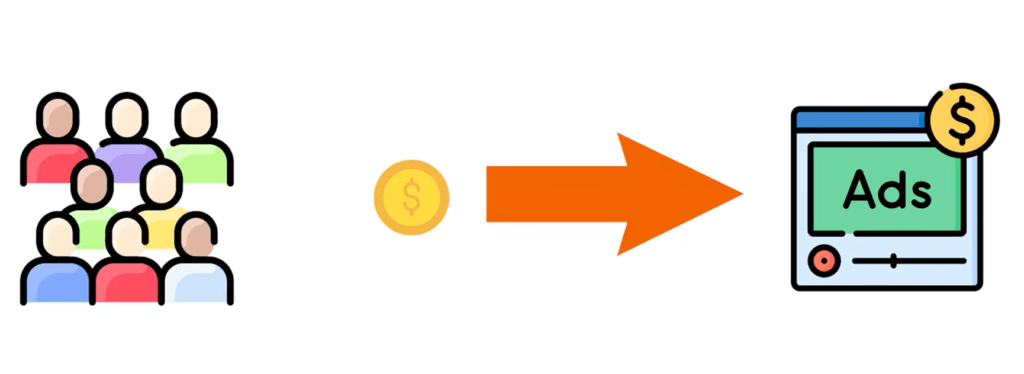
The first method is to use a self-liquidating offer. A self-liquidating offer is an offer where you get your audience to pay a small amount upfront. The objective is to use that initial payment to cover some or all of your advertising costs. Because the amount customers have to pay is relatively small, you should be able to attract a large number of people who don’t mind making the payment.
One person who does this very well is Russell Brunson, the founder of ClickFunnels. He runs Facebook ads to sell his marketing book for around $10. In fact, he positions it as a “free plus shipping” offer, meaning the book itself is free and the customer essentially pays $10 for shipping.
We know that this offer attracted a lot of customers because it is a great deal. It is almost a no-brainer offer, especially since the book has received plenty of good reviews.
But here is the important part:
- Russell Brunson isn’t trying to make money from selling the book.
- You can probably guess the strategy.
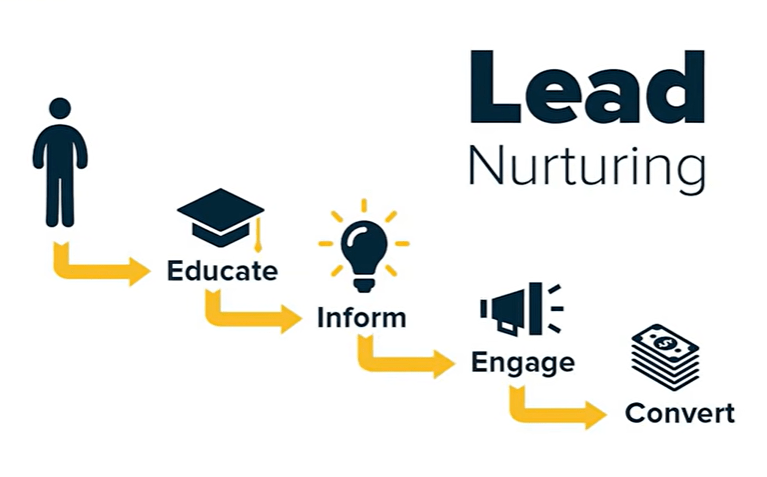
- The people who purchase the book enter a nurturing process. After that, they are upsold into purchasing ClickFunnels’ software.
- This is where the real money is made.
How a Self-Liquidating Offer Reduces CPA
In the software industry, competitors may pay up to $500 to acquire a customer. Their average cost per acquisition, or CPA, can be around $500. For ClickFunnels, however, the effective acquisition cost can be close to $0 because the self-liquidating offer-the-book helps cover the advertising costs.
That is the basic idea behind a self-liquidating offer. Instead of spending $500 to acquire a customer directly, you can use a low-cost front-end offer to recover your advertising expenses and then generate your profit through your backend products or services. This strategy helped ClickFunnels grow very quickly.
Self-Liquidating Offers Aren’t Just for Software
If you think self-liquidating offers only apply to the software or marketing industry, you’re wrong. They can also work extremely well for local service businesses. We have used this strategy in industries such as beauty and education, and it works.
For example, we helped a beauty salon sell a $39 trial offer. On the front end, the salon was able to recover some of its advertising costs simply by collecting the $39 payment online. Then, when customers came in for their trial sessions, the salon could upsell them into packages worth around $3,000 to $5,000. This is where the business generates its profit.
Why Self-Liquidating Offers Are Scalable
With this approach, you can spend significantly less of your own advertising budget while still acquiring plenty of customers. That makes your campaign much more scalable. You can essentially keep pumping the revenue generated from your self-liquidating offer back into your advertising campaign. The revenue helps fund more advertising, which generates more customers, which generates more revenue, and the cycle continues.
However, there are two important caveats.
First, you need to have a strong offer. It cannot simply be a gimmick designed to get people to pay you a small amount.
Second, you need to have a good upsell process. Getting someone to purchase your initial offer is only part of the strategy. You need an effective way to nurture and convert those customers into higher-value products or services.
2. Use Retargeting
Retargeting is a very cost-effective way to get customers, particularly if you don’t have a large advertising budget. For example, you can set up retargeting on Facebook so that your ads are shown only to people who have previously visited your website.
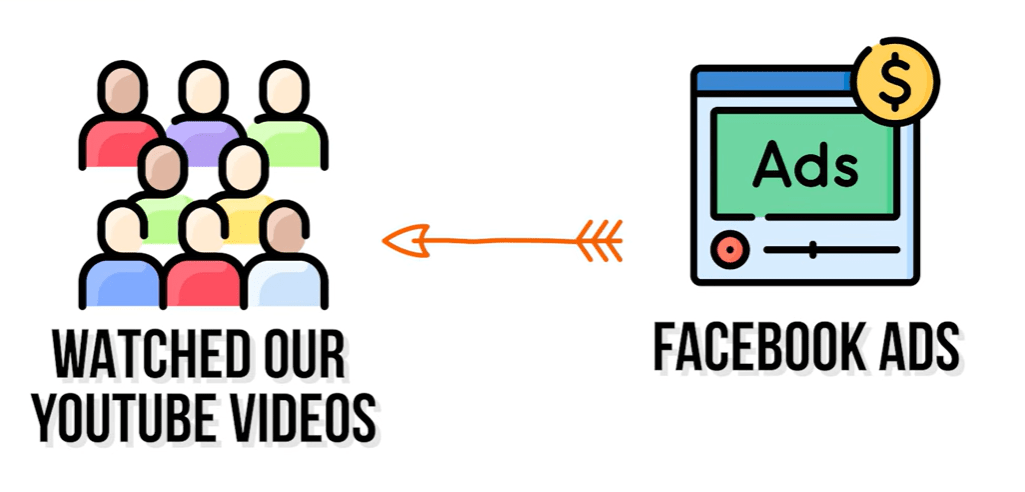
You can also use cross-channel retargeting. For instance, you could retarget people who have watched your YouTube videos by showing them your Facebook ads. Instead of targeting everyone on Facebook and potentially blowing your advertising budget, you’re focusing your money on people who have already demonstrated some level of interest in your business.
Think About Your Own Online Shopping Experience
You have probably experienced retargeting yourself. Sometimes, you browse a product on Lazada, and after that, the same product seems to follow you everywhere online. That’s retargeting. The company knows that you have already shown interest in the product, so it continues showing advertisements to you in an attempt to bring you back and complete the purchase.
Why Retargeting Is Cost-Effective
Retargeting can be highly cost-effective because people who already know your brand tend to be more likely to click on your advertisements. When your ads have a higher click-through rate, Facebook can charge you a lower advertising fee.
Another advantage is that you aren’t competing with other advertisers in exactly the same way as you would when targeting a broad audience. You’re essentially bidding for your own existing audience, which means the level of competition can be lower.
This is why you can sometimes see results with a budget of as little as $20 to $30 per day.
The Downside of Retargeting
However, there is one major downside, scalability. Your retargeting audience is usually much smaller than a broad prospecting audience. Because of this, you can exhaust your retargeting audience fairly quickly. There are only so many people who have already visited your website, watched your videos, or interacted with your business. But if you have a small advertising budget anyway, this isn’t necessarily a problem. If your budget is limited, you can focus primarily on retargeting and make the most of the audience you already have.
3. Use a Low-Commitment Offer
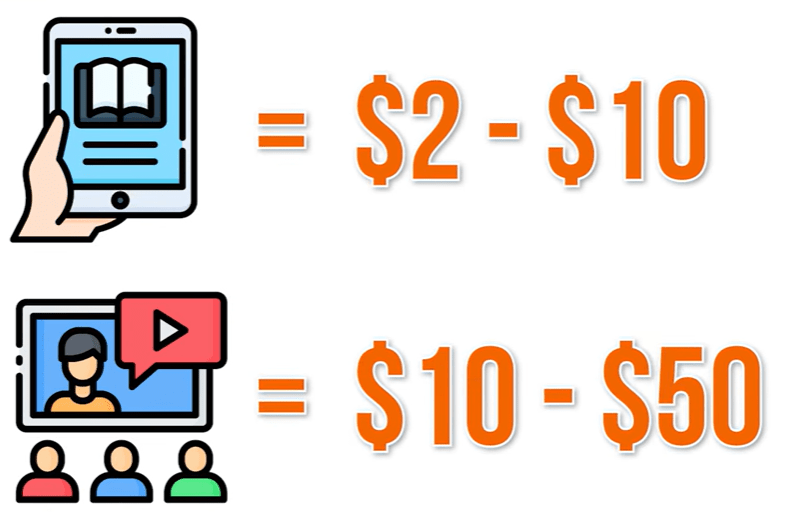
The third tactic is to use a low-commitment offer, such as a webinar or an ebook, to hook your audience. Low-commitment offers generally have a very low cost per conversion.
For example:
- An ebook download may cost around $2 to $10 per conversion.
- A webinar may cost around $10 to $50 per conversion.
Even at the higher end, these costs can still be significantly cheaper than your typical cost per conversion. So, if you have a tight advertising budget, I would recommend considering a webinar or ebook funnel.
How an Ebook Funnel Works
With an ebook funnel, you typically offer people a useful ebook in exchange for their email address. Once you have their email address, you use a series of emails to nurture them and eventually convert them into customers. On paper, this sounds like a great strategy because you can build an email list at a relatively low cost. However, there is an important limitation.
Why Ebook Funnels May Not Always Work
Personally, I’m not a big fan of ebook funnels because I haven’t seen much result from them. Perhaps other marketers have had better results. If that’s you, feel free to share your experience. The problem I found is that people who download an ebook generally don’t open or click the emails that I send. Why? They don’t know me.
They simply downloaded a random ebook from the internet, and I am essentially a stranger to them. There is no relationship. So, even if you manage to get a few thousand people to download your ebook or reports, I find that it doesn’t translate into customers very effectively. This is an important distinction.
Getting leads is not the same as getting customers.
A low cost per conversion looks good on paper, but if those conversions don’t eventually become customers, the campaign isn’t necessarily profitable.
Why I Prefer Webinar Funnels
On the other hand, I would recommend a webinar funnel if you have a tight budget. The biggest advantage of a webinar is that people spend significantly more time with you. During a webinar, people may listen to you and watch you for one to two hours. That allows you to form a much stronger relationship with them than an ebook can typically create.
A webinar also tends to get a good response and signup rate because it is a low-commitment offer. People can sit comfortably at home and watch your webinar. They don’t need to travel anywhere or even leave their room. The resistance to signing up for a webinar is therefore relatively low. If you have a tight budget, you can still generate results by using a webinar funnel.
The Importance of Following Up
However, there is another caveat. You need to have a good follow-up system to make sure people actually attend your webinar. Getting someone to register is not enough. You need to remind them to attend.
For example, you should send them an SMS one day before the webinar and another reminder on the day of the webinar itself. These reminders help increase attendance and make sure that the money you’re spending to generate registrations doesn’t go to waste.
Webinars Can Build Stronger Relationships
Personally, I’ve run quite a number of webinars. I’ve also conducted a joint webinar with Facebook itself, and there was quite a lot of participation. Based on that experience, I think webinars can be a great marketing tool, especially when you’re working with a limited budget. However, the flow and content of the webinar are extremely important. Remember, people are watching from home. They can easily get distracted by something else.
They might check their phones, browse the internet, talk to someone, or simply leave the webinar if the content isn’t engaging. That’s why your webinar should include storytelling and useful educational information. It should provide genuine value. It should not simply be a hardcore sales pitch. If the entire webinar feels like one long sales presentation, people will be less inclined to stay until the end. The goal is to educate, engage and build trust before presenting your offer.
There Is No Free Lunch in Business
At the end of the day, there is an important principle to understand:
In business, you either spend a lot of time or you spend money to acquire customers and grow. There is no free lunch. The three methods discussed above allow you to do digital marketing with a relatively small budget. But there is a trade-off. If you spend less money, you generally have to spend more time.
For example, if you want to run webinars regularly, there is a significant time commitment involved. You have to prepare the webinar, create the content, promote it, follow up with registrants, conduct the webinar and ultimately convert attendees into customers. That’s time you have to invest in order to reduce your advertising costs.
Even “Free” Organic Marketing Isn’t Really Free
The same principle applies to free or organic marketing strategies such as SEO. SEO may not require you to pay for every visitor directly, but it certainly isn’t free. You have to spend a significant amount of time writing good content. You also need to build relationships and acquire backlinks to improve your website’s authority and rankings.
All of that requires time. And when you outsource your SEO, you’re essentially paying someone else for their time and expertise. So, whether you’re paying for advertising or paying someone to perform marketing work, there is always a cost involved.
When Your Business Grows, Time Becomes More Valuable
If your business is new, doing things yourself to save money is completely understandable. When you’re just starting out, you may not have much cash to invest in advertising, employees, agencies or other marketing resources. Doing things yourself can be a sensible way to conserve your budget.
However, as your business becomes bigger, your priorities should change. At some point, saving money doesn’t make as much sense anymore. You need to start thinking about how to save time. Why? Because your time becomes much more valuable as your business grows. You can earn money.
But you can’t buy back time.
This is ultimately the trade-off behind customer acquisition. You can spend money to acquire customers faster, or you can spend more of your own time finding creative ways to reduce your acquisition costs.
The three strategies discussed here, self-liquidating offers, retargeting and low-commitment offers such as webinars, can help you make your advertising budget go further. But they don’t eliminate the cost of acquiring customers. They simply change where and how you pay that cost.
If you have a small budget, these strategies can help you get started and make your marketing more efficient. As your business grows, however, you should also consider the value of your time and whether it makes sense to continue doing everything yourself.
Ultimately, successful marketing isn’t about finding a way to get everything for free.
It’s about finding the most efficient way to invest your money, time and resources to acquire customers and grow your business.