When we think of the term entrepreneur, we often picture someone adventurous, aggressive, confident, and charismatic.
The stereotypical entrepreneur might be someone like Richard Branson, the billionaire founder of Virgin Group. Branson is well known for his flamboyant personality and attention-grabbing PR stunts, from crossing the English Channel in unusual ways to driving a tank into Times Square.
Another commonly cited example is Steve Jobs, who was charismatic and highly convincing. He successfully conducted countless product launches in front of huge audiences and helped sell millions of Apple products.
Mainstream media tends to emphasize these personality traits when portraying entrepreneurs.
And that can be misleading.
It can make us believe that there is only one way to succeed in entrepreneurship: You need to be charismatic, persuasive, and good at selling—or you are doomed to fail.
But that simply isn’t true.
You Don’t Have to Be Charismatic to Succeed
There are many successful entrepreneurs who are quiet, reserved, and much more comfortable working behind the scenes.
The problem is that we don’t hear as much about them because their personalities aren’t as entertaining for movies, television, or mainstream media.

One example is Henry Ford, the founder of Ford Motor Company.
Henry Ford was not the stereotypical entrepreneur. He wasn’t known for being an exceptionally persuasive salesman or someone who constantly appeared in the media.
Instead, he was a strong systems thinker.
Ford developed the assembly-line production method for manufacturing vehicles. Before this, cars were manually assembled by hand, which required significant amounts of time and manpower.
By implementing mass production, Ford was able to dramatically reduce the cost of manufacturing a car—by as much as 90%.
That helped make his company highly successful.
Ford didn’t necessarily need extensive selling or sophisticated marketing to create demand. By pricing his cars significantly lower than competitors, demand came naturally.
At one point, demand was even higher than supply.
Henry Ford didn’t need to be an eloquent salesman like Steve Jobs to become extremely successful.
His strength was systems and processes.
And that’s an important lesson: Your path to entrepreneurship doesn’t have to look like someone else’s.
What About Small and Medium-Sized Businesses?

You might be thinking:
“Those are huge companies. What about SMEs? Don’t we need sales in order to grow a business?”
This is something I personally struggled with.
I didn’t come from a sales background. I’m an introvert, and I prefer being behind the scenes.
When I entered the agency business, however, I quickly realized that the industry was largely driven by sales.
Historically, agencies were closely connected to media companies such as newspapers and television networks. They sold advertising space and took a cut from those sales. That was essentially the business model of many agencies.
As a result, many pioneers and competitors in the industry grew through cold calling and one-to-one sales.
These were people who were persuasive, confident, and comfortable talking to prospects.
When we first started our agency, I copied what our competitors were doing.
We started cold calling and even hired people to do it.
We tried different opening lines. We experimented with different databases. We worked hard to make the strategy work.
But despite all those efforts, we could barely close any deals.
Eventually, I realized something important:
Cold calling wasn’t the right strategy for me.
It didn’t align with my personality or my strengths.
And even when I hired other people to do it, I couldn’t give them the right direction because I didn’t fully understand how to make the strategy work.
The Ironic Thing About Being a Digital Marketing Agency
The ironic part was that we were a digital marketing agency, yet we didn’t seriously consider using digital marketing ourselves at the beginning.
We thought we could simply follow the strategies that other agencies were using.
So we focused on cold calling.
But eventually, we discovered that digital marketing actually worked extremely well for us.
I realized that I was much better suited to a one-to-many approach than a one-to-one approach.
Instead of speaking to one prospect at a time, I could communicate with many people through:
- Webinars
- YouTube videos
- Paid advertising
- Educational content
That became our breakthrough.
With a one-to-many approach, I could spend hours refining the perfect message for a video or an advertising campaign.
I could carefully think through what I wanted to say instead of having to come up with something within two seconds during a sales conversation.
In other words, I was finally playing in my strength zone.
Finding a Marketing Approach That Fits Your Strengths
Our ad copy started performing very well.
Clients who followed us online would tell us that our messaging was different.
It didn’t look like the typical advertisements they saw in their Facebook News Feed—the kind of generic sales messages saying things like:
“Grow your business 10X!”
or
“Make $10,000 per month!”
Instead, our content stood out because a lot of thought and research went into creating each advertisement.
We weren’t simply trying to sound persuasive.
We were focused on developing a message that was useful, relevant, and meaningful to our target audience.
That experience taught me a powerful lesson:
There are many ways to win in the market.
Unlike mathematics, business isn’t black and white.
There isn’t always one definite answer or one straight path to success.
Just because something works successfully for another person doesn’t mean it will work for you.
The key is to find and leverage your own strengths.
It took me many years to realize this.
I wish someone had told me much earlier.
There Are Many Types of Successful Entrepreneurs
The charismatic entrepreneur, such as Richard Branson, is only one type.
The systematic entrepreneur, such as Henry Ford, is another.
But there are many other types of entrepreneurs with completely different talents and personalities.
The Intellectual Entrepreneur
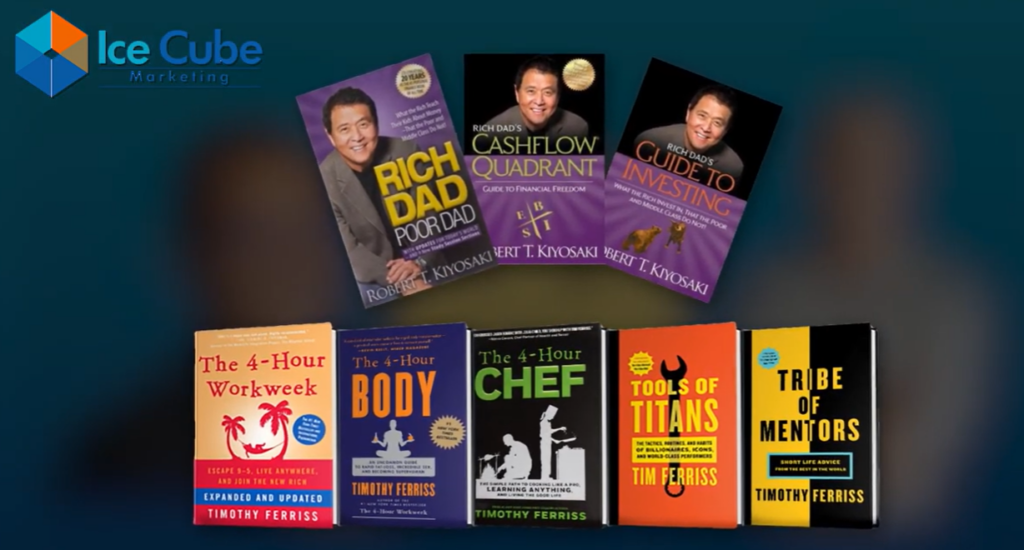
Consider people such as Robert Kiyosaki or Tim Ferriss.
They developed intellectual concepts and built businesses around those ideas.
Robert Kiyosaki, for example, popularized the concept of the Cashflow Quadrant. He created board games, training programs, and books around the concept, turning that intellectual asset into multiple sources of revenue.
You don’t have to be in the training business to become an intellectual entrepreneur.
Look at the marketing industry.
Dharmesh Shah, co-founder of HubSpot, helped popularize the term inbound marketing and build a movement around the concept.
People interested in inbound marketing subsequently became potential customers for HubSpot’s software.
HubSpot grew into a billion-dollar company as a result.
This illustrates another possible entrepreneurial path:
Create an intellectual asset and build an ecosystem around it.
Whatever industry you are in, you can potentially develop a concept, framework, methodology, or intellectual asset that differentiates you and helps you establish authority within your market.
The Creative Entrepreneur
There are also creative entrepreneurs, such as Walt Disney.
Their strengths may lie in creativity, storytelling, entertainment, design, or creating experiences that connect with people.
The Networker Entrepreneur
Then there are networker entrepreneurs, such as Oprah Winfrey, whose success has involved building powerful relationships, communities, audiences, and networks.
The point is not that one entrepreneurial personality is better than another.
The point is that there are many different ways to succeed.
Look at Your Own Background to Discover Your Strengths
So how do you figure out what your strengths and natural inclinations are?
One place to start is by looking at your background.
Before I entered the digital marketing business, I also taught soft skills to JC students and working adults on the side.
I loved teaching.
I enjoyed taking complicated concepts and simplifying them so that other people could understand them.
It was both an interest and a strength of mine.
But initially, I didn’t think about leveraging that strength in my business.
Why?
Because I was too busy looking at what other people were doing instead of looking at myself.
Once we started leveraging my strengths and creating educational videos, things changed.
Over the years, our business grew from two people to 30 people and became one of the top 3% of agencies in Singapore.
Today, this approach generates around 80% of our clients.
Looking back, it sounds like a no-brainer.
But at the beginning, I never thought that creating teaching videos could become a way to acquire clients.
Don’t Blindly Copy Other Entrepreneurs
This is perhaps the most important lesson.
We should not blindly copy the strategies of other people simply because they appear to be successful.
When you copy someone else, you may never be able to execute the strategy as well as they do.
Why?
Because it may not be in your DNA.
Their strategy may be built around their personality, talents, experience, resources, and strengths.
What works naturally for them may feel completely unnatural to you.
Instead of asking:
“What are successful people doing, and how can I copy them?”
A better question may be:
“What am I naturally good at, and how can I build a business around it?”
You might be charismatic like Richard Branson.
You might be a systems thinker like Henry Ford.
You might be an intellectual entrepreneur like Robert Kiyosaki or Tim Ferriss.
You might be a creative entrepreneur like Walt Disney.
Or you might be a networker like Oprah Winfrey.
There are many paths.
The goal is not to force yourself into someone else’s path.
The goal is to find your own path and forge your way by leveraging your talents.
Because entrepreneurship isn’t about becoming a copy of someone else.
It’s about discovering what makes you different—and building your business around it.