Executive Summary
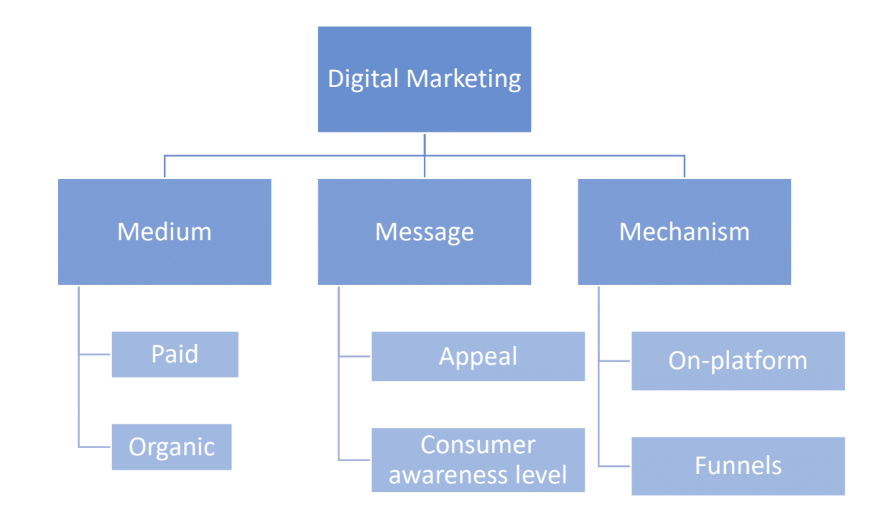
With so many channels, tools and tactics available today, digital marketing in Singapore can quickly become overwhelming for SMEs. At Ice Cube Marketing, we simplify the entire process into three decisions: Medium, Mechanism and Message — the 3Ms of Digital Marketing.
Where will you reach your customers?
How will you turn their attention into an enquiry or sale?
What will make them choose you?
If any one of these three is weak, the campaign struggles.
Table of Contents
Welcome to our guide that’s anything but the run-of-the-mill. If you’re tired of hearing that “Instagram is for the young” or that “TikTok is all about video,” you’re in for a treat. Unlike typical digital marketing guides that echo these sentiments, ours draws from 8 years of hands-on experience executing digital marketing campaigns that drive sales. Aimed at Small and Medium Enterprises (SMEs), this guide focuses not on brand awareness or viral posts, but on sales-driven marketing. By the end, you’ll also get a sneak peek into our favorite tactics.
To put our expertise into context, we allocate S$5 million annually to Facebook and Google ads. The result? A plethora of campaigns that have seen conversions, from lead generation and workshop sign-ups to direct e-commerce purchases.
3Ms of digital marketing
While traditional marketing swears by the 5Ps – Product, Price, Promotion, Place, and People – the digital landscape can be understood through the 3Ms: Medium, Message, and Mechanism.
1. Medium: Where Should You Market?
Mediums (or channels) determine how you reach your target audience. Broadly, mediums fall into two categories:
Paid Mediums:
Think of online platforms like Facebook and Google (which also encompass Instagram, WhatsApp, YouTube) as landlords. Just as you’d rent prime retail space in a bustling mall in Orchard road to attract walk-ins, you “rent” ad space from these platforms to draw online traffic.
There is no shortage of digital platforms available to Singapore businesses.
Google ~5M+ users
Youtube(Google) 5.33M users
Facebook 3.8M
Tiktok 3.8M users
Instagram 3.35M users
Carousell ~1.9M/month users
X/ Twitter ~1.48M est. users
Xiaohongshu ~580k users
Source: Dataportal 2026 report Singapore
We advise businesses to focus on just Google and/or Meta for a start, for these reasons:
Data consolidation: For SMEs, spreading a small advertising budget across too many channels can dilute both results and learning. In 2026 and beyond, giving one ecosystem enough spend and data helps its AI learn faster and improve audience targeting, messaging and placements over time. Google can consolidate signals across Search, YouTube and Gmail, while Meta does the same across Facebook, Instagram and WhatsApp.
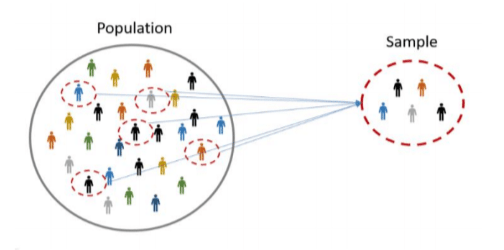
Number of users: Google and Meta each have more than 4million users in Singapore(practically the whole of Singapore), which makes it suitable for any business in Singapore.
Mature ads platform: When Facebook Ads started in 2009, the ads technology was pathetic. However, over the years, its machine learning and targeting capabilities have gotten much more sophisticated. This means increasingly better ROI for businesses. Other platforms may have users in Singapore, but their ads platform still leaves much to be desired. Google is the old guard and needs no introduction.
Scalable: Sure, you do not need so many customers to make a profit from ads, but Google and Facebook allow you to scale your advertising campaign when you want to. There is a compound effect. The more you advertise on Facebook, the more it learns about your target audience and improves on its targeting precision.
A good example is Bioskin Singapore, where we focused primarily on Meta instead of spreading the budget across multiple platforms. As the campaign accumulated more conversion data, we identified which audiences, creatives, and messages worked, then reinvested those learnings back into the same platform. This allowed us to profitably scale Bioskin’s original advertising budget by 10X on Meta alone—showing that for SMEs, going deeper on one proven channel can sometimes create more growth than trying to be everywhere at once. Click here to read the full Bioskin case study.
Reliability: Other platforms may give you a trickle of a few customers but they quickly dry out. Facebook & Google are able to give a consistent stream of customers each month based on your ad budget–basically, what SMEs in Singapore need the most.
That being said, Facebook and Google advertising involves very different strategies. Social media is centred on interruption marketing while Search is intent-based marketing. Learn more about our social media marketing and search engine marketing strategies.
Organic Mediums:
While ‘organic’ suggests unpaid, these platforms aren’t entirely free. Crafting content for Google SEO or YouTube requires time and effort. Remember the days when a Facebook page would connect you to a vast audience segment? Those days are dwindling. However, since these listings are essentially free, there’s no harm in maximizing your online presence through platforms like Google My Business, Tech in Asia, e27, and others. Innovative organic mediums also come into play here, like affiliate and referral marketing.
Take, for instance, Secretlab’s ingenious tactic. They extend the warranty on their chairs by two years when customers share an image of their purchase online. It’s a win-win: customers don’t pay extra, and Secretlab enjoys free promotion. Dropbox’s offer of additional free space to those who refer their friends is another classic example.
2. Mechanism: How Will You Convert Attention Into Leads/Sales?
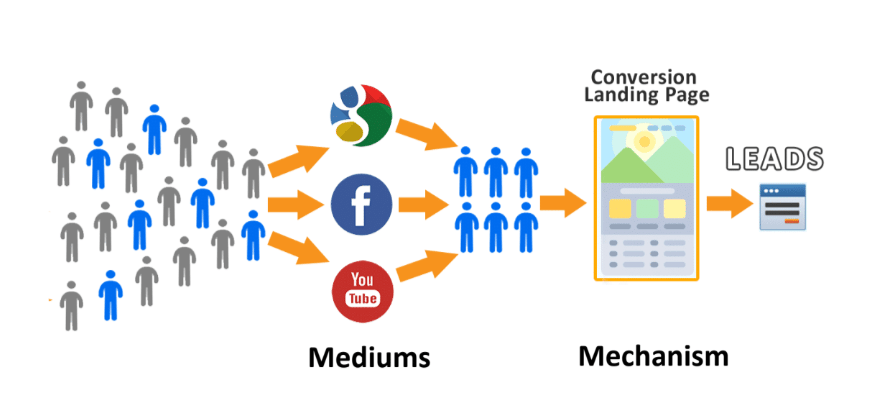
At its core, a mechanism is your strategy or your “funnel”. It’s the path you guide potential customers down to hopefully turn them into paying customers. Many mechanisms exist, but let’s cover a few popular ones.
On-platform Mechanisms
Facebook and Google provides conversion mechanisms for you to use without having to build your own websites. Here are some examples:
Messenger Bots: You’ve probably seen ads that, when clicked, direct you to Facebook or WhatsApp Messenger. Here, businesses can use chatbots to automate conversations. Tools like ManyChat are great for this. However, a word of caution: chatbots can sometimes be too generic, which might turn some people away. Personally, we prefer the direct touch – a phone call.
Lead Forms on Facebook: This is quite straightforward. Click on an ad, and a pre-filled form with your details pops up. Handy, right?
Medium vs Mechanism
Before we delve further into mechanisms, let’s clarify the difference between your medium (how you reach your audience) and your mechanism. Whether you use paid ads or organic posts, both can lead to the same mechanism. For instance, you can guide organic visitors from a Google search straight to your chatbot.
Now, here’s a common misconception: some think SEO (Search Engine Optimization) is a strategy but it’s just a medium—a way to get traffic. Without a clear mechanism in place, even fantastic SEO won’t get you the results you want. You will need a proper lead generation strategy in Singapore to convert traffic into leads and customers.
The World of Funnels
Funnels are a subcategory of mechanisms, and they come in many flavors:
Webinar Funnel: Click on an ad, sign up for a webinar, get reminder emails, attend the webinar, and finally, make a purchase.
Ebook Funnel: Have tons of content? Guide users through valuable content and then lead them to a product or service.
020 Funnel: Our personal favorite! It starts with a detailed landing page that pre-sells the product. From there, we warm up the lead, get them ready for an appointment, and close the deal in person.
Funnels: Online vs offline
Top US marketers like Russell Brunson or Ramit Sethi tend to promote sales funnels that are 100% online and even automated. They run ads that send traffic to a webinar or an automated email sequence, which nurtures and ultimately converts the prospects, collecting payment online.
However, in Singapore, consumer expectations are slightly different. Perhaps because of the city’s size and density, we expect to meet people face to face before making a buying decision.
An O2O(Online to offline) approach is needed. Here’s how it works. As per the proven internet marketing strategy, you still run an online campaign, buy ads and send them to a landing page but the call-to-action offer will be in the offline context. To make sure that your prospects show up for the offline appointment, it is important to nurture the leads using WhatsApp, which is the main communication channel in Singapore.
An example is Athletic Chamber, a gym located in Upper Serangoon road. Generating more leads from online marketing was only part of the solution. We implemented a lead management and WhatsApp auto-reply system so enquiries received immediate responses, even when trainers were busy. This helped them stay responsive, nurture leads and streamline follow-up. Combined with campaign improvements, their leads grew from 40 to 180 per month within four months, contributing to a S$23,000 increase in monthly revenue. This shows why post-ad conversion systems, such as WhatsApp automation and follow-up, are just as important as lead generation. Read the full Athletic Chamber case study.
Breaking a Myth
There’s this idea floating around that you need a top-tier website to kickstart any digital marketing campaign. But that’s not true. If you break down our 3M model, you’ll see that the mechanism (how you capture leads) doesn’t always need a website. It could be a messenger bot, a lead form, or a landing page.
A flashy website might be nice, but it doesn’t guarantee digital marketing success. That’s why it’s crucial to understand the 3M model. Otherwise, you might just be throwing your money away.
3. Message: Why Should Customers Choose You?
The third cornerstone of digital marketing is “Messaging.” Often overlooked, yet in our view, it holds the most potential. While many are drawn to the allure of the medium and mechanism due to their tech-savvy nature, messaging demands careful attention and groundwork. As a result, many ads resort to straightforward promotional tactics, like those brief ads we frequently see on our newsfeeds that directly pitch a product or loudly announce a 20% discount. These often come across as bland and unengaging. Given the lively nature of social media, it’s imperative to craft our messages thoughtfully to capture genuine attention.
Three Aspects of Messaging
Awareness Level: Before crafting a message, assess where your audience stands in terms of awareness. Are they problem aware, or are they solution aware? Consider my personal experience: My laptop was slow, making me problem aware. However, I wasn’t solution aware until a salesperson suggested I upgrade my RAM. The lesson? Ensure your ad messaging aligns with your audience’s level of awareness.
Appeal: What drives your message? Logic or emotion? The ’emotions wheel’ is an excellent tool to understand the diverse range of human emotions. While happiness and sadness are the usual go-tos, leveraging emotions like fear or envy can often yield better results. Ads tapping into negative emotions can sometimes outperform their positive counterparts, mainly because we humans are inherently averse to losses. This concept was even validated by economist Daniel Kahneman, who bagged a Nobel for proving it. And always remember: we’re marketing to humans, not machines.
Benefit: Zero in on the primary benefit you want to highlight in your ad. For instance, iPhone ads expertly showcase one major feature at a time, be it shock- resistance, waterproofing, or privacy. Why? Good marketers understand the ‘Rule of 1’. A message loses its impact when it’s cluttered. Keep it focused on a central benefit.
For House of Hows, headed by Singapore “supertutor” Laura, the challenge wasn’t the quality of the tuition programme—it was getting more parents to understand why they should take action. We crafted the campaign messaging around the parents’ awareness level, the right emotional appeal, and clear benefits, translating House of Hows’ teaching strengths into messages that resonated with parents’ concerns about their children’s academic performance. The result was an immediate surge in enquiries from Day 1 and approximately 400 leads within a few months, demonstrating how the right Message can turn a strong service that was previously reliant on word-of-mouth into scalable demand. Read the full tuition centre case study.
“Cowboy” advertising
Some marketers think that the internet has no boundaries & rulings and they are free to post anything they want. Well, Singapore is one of the first few countries to introduce a law to fight fake news by restricting the content published on social media and on the internet. This comes after news reports of sightings of articles using fake stories to promote digital currency trading.

Tips for Digital Marketing in Singapore
Facebook Targeting
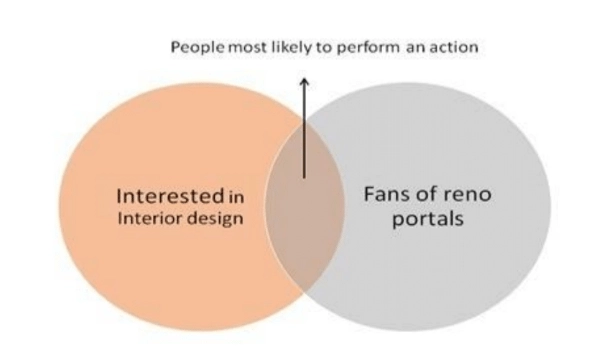
You’ve probably heard about Facebook’s ability to go laser targeted on your ideal prospects based on a large amount of data it has collected of its users. Unlike in the US (in which Facebook has access to more data), however, a number of targeting options are not available to us in Singapore, for example, income level, home type, b2b buyers, and certain purchase behaviors are not available. Guess what; this is only part 1 of the story. The real potential around Facebook targeting lies in its use of machine learning. It basically takes over our job as advertisers and decides who to target for us. The longer you run your campaign and accumulate more data, the more accurate it becomes. Facebook ads is built for bigger countries like USA with hundred of millions in population, so when it comes to Singapore, imagine how much easier and faster it is for Facebook to find your ideal prospects. Time and again, it has been shown. No matter what audiences you choose in your targeting settings, there is bound to be overlaps in the audience being targeted as Facebook takes over the driver’s seat in finding you the perfect audience. For example, if you are an interior designer and you are targeting people who are interested in interior design as well as people who are fans of Renovation portals such as Renotalk, Renonation, Qanvast, Facebook will almost show your ads to the same group of people most likely to click on your ad.What this means is that the Singapore government and its people have a very low tolerance for deceptive marketing practices.
When running digital campaigns in Singapore, advertisers also have to take into consideration advertising guidelines specific to highly- regulated industries such as in healthcare. For example, words like ‘best,’ ‘discounts,’ ‘Singapore’s No.1’ are not allowed under the Healthcare Services Act (HCSA). You can read more about the nuances of doing home services marketing and beauty marketing in Singapore.
The takeaway goes beyond simply obeying the law. In fact, being honest in your ads is just good marketing. Advertising legend, David Ogilvy has this to say, “The consumer is not a moron, she’s your wife! Don’t insult her intelligence. You wouldn’t lie to your wife, don’t lie to mine.”
Since Singaporeans are highly educated and savvy, it pays to be transparent and authentic in your ads. Now, who says you can’t add impact to your ads with strong copywriting techniques while staying with the facts?
How much does digital marketing cost in Singapore?
Digital marketing costs in Singapore can be broken into 2 major components: Agency fees and Advertising Costs.
Digital marketing Agency fees
Digital marketing agency fees in Singapore typically cost S$500–S$5,000+ per month, depending on advertising spend, creative production, tracking and campaign support. Cheaper packages may mean fewer tests, generic creatives and weaker tracking. Read our full guide to digital marketing costs in Singapore to understand what you should be paying for—and what to look out for when comparing agencies.
Singapore SMEs may reduce digital marketing costs through the EDGE Grant(Previously PSG grant), which can cover up to 50% of eligible costs for approved solutions. Depending on the package and vendor, support may include SEO, Google ads, social media marketing, content creation and campaign management. Businesses must use an approved solution and vendor, and should not sign a contract, make a payment or pay a deposit before applying, as this may affect eligibility. Since requirements and funding levels can change, you can find out more information about Grant for digital marketing in Singapore.
Cost of advertising
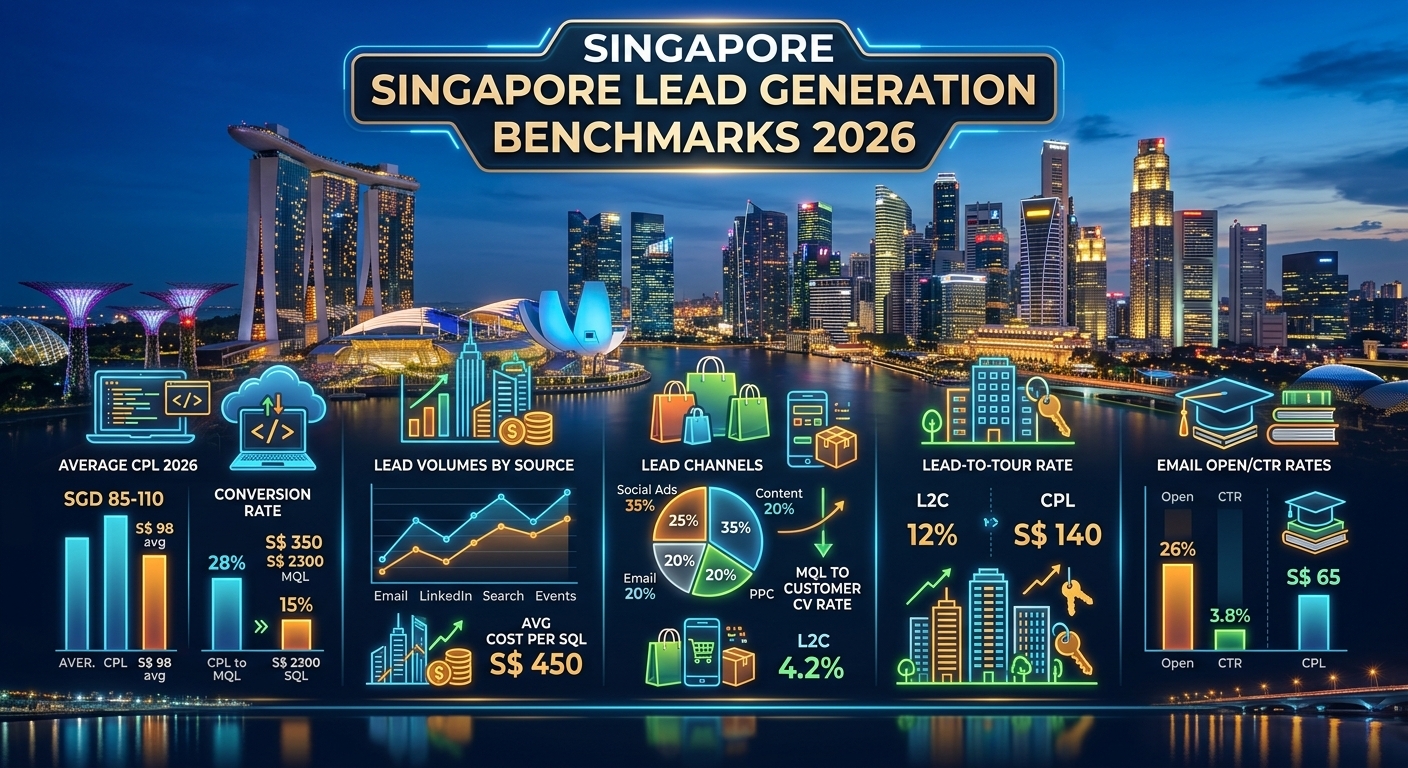
The average cost per lead in Singapore ranges from $17 to $250 depending on the industry you are in. You can find out the cost per lead for your industry in our CPL benchmark report for Singapore.
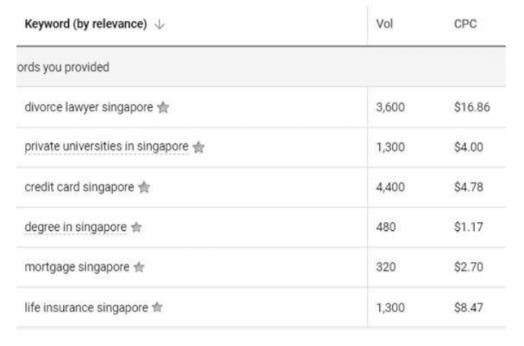
CPM and CPC are at $28.94 and $1.02 respectively in Singapore, based on our Facebook ads cost benchmark report 2026. On the Search engine front, the image below lists cost per click for various common keywords in Singapore. Cost per click ranges from $1 to $16 for commercial keywords in Singapore. Similar set of keywords go for as high as US$47 per click in the US. It goes to show that Singapore digital advertising costs are nowhere near their peak.
In 2026 and beyond, targeting is becoming less important, given the advent of AI. The highest-converting campaigns typically have the best ad message instead. It will make targeting a whole lot easier. By using ad copies that attract your target audiences to engage with or click on, Facebook develops an idea of your best prospects and show your ads to more of the same type. This way, your ad actually does the “targeting” for you! Put simply, Ads ideation trumps audience targeting, particularly in Singapore.
Kiasu-ism
From Hello Kitties to Iphones to hawker fare, it is no secret that Singaporeans are willing to queue for hours(and even days) to get our hands on desirable products. A queue begets an even longer queue because of the power of social proof. You can create social proof online too; using testimonials, media features, user stats, and other methods. It doesn’t hurt to throw in some ‘scarcity’ to amp up the desirability of your product. Scarcity can take the form of a time-
limited offer or exclusive coupons.
Bring your marketing to the next level
At the end of the day, “marketing” should not be detached from “digital marketing.” Marketing entails going back to basics and gaining a real understanding of the target audience. Digital is but a channel. This article provides you with general insights into the Singapore market, but in order to win in your marketplace, you have to get more specific and dive deeper. If you need any help in your digital marketing, don’t forget to check out our agency services and get your free consultation.